
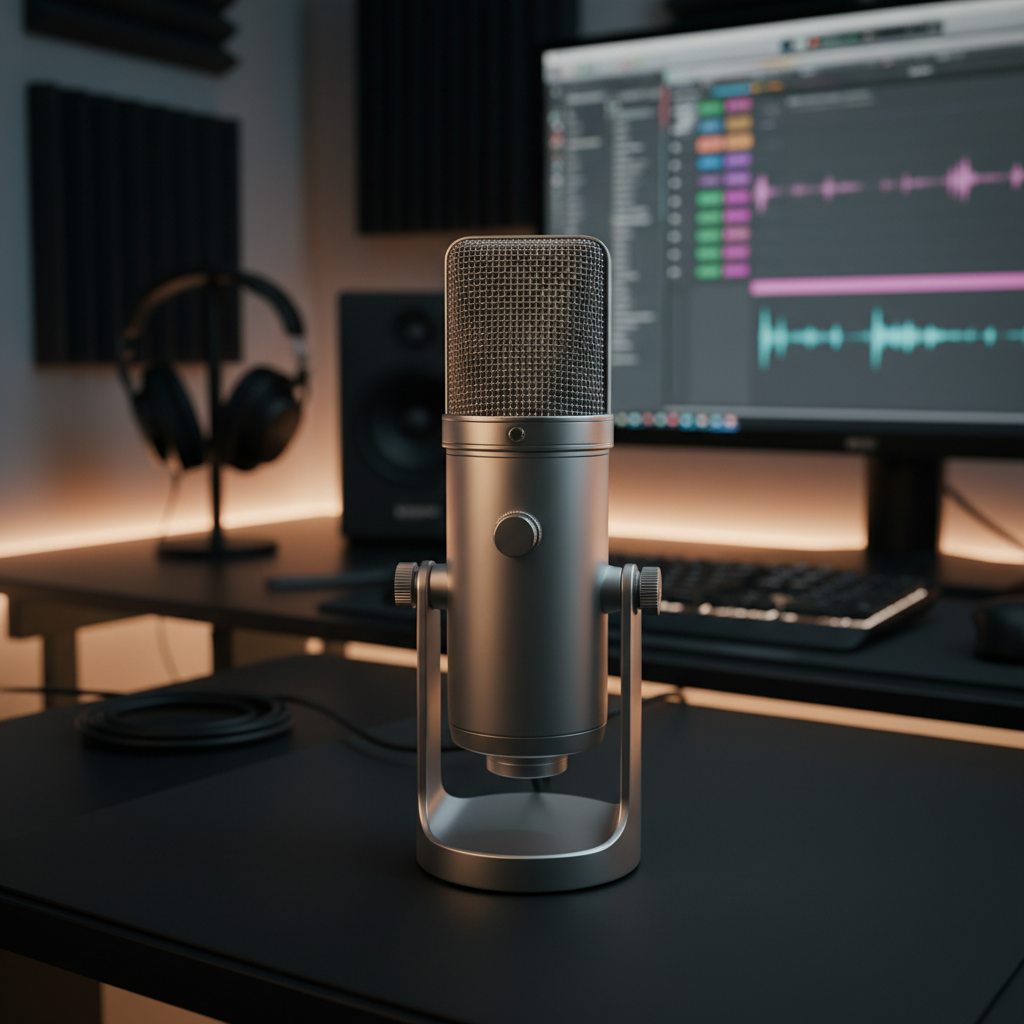
For aspiring musicians, podcasters, and YouTube creators, achieving professional-sounding vocals in a home studio can seem like a daunting task. One of the most critical decisions you’ll make in this journey is selecting the right microphone. The microphone is literally the voice of your project, and a poor choice can instantly undermine even the most heartfelt performance. This article will guide you through the process of choosing the perfect microphone to capture pristine vocal recordings within the confines of your home studio, focusing on common concerns like sound quality, budget, and ease of use.
Condenser vs. Dynamic Microphones: Understanding the Core Difference
The first significant hurdle newcomers face is understanding the difference between condenser and dynamic microphones. While both convert sound waves into electrical signals, they do so with fundamentally different mechanisms and strengths. Think of it like cars: a sports car (condenser) is sleek and responsive, perfect for capturing every nuance, while a pickup truck (dynamic) is robust and reliable, great for handling rougher conditions.
Condenser microphones are known for their sensitivity and detailed sound reproduction. They use a lightweight diaphragm that vibrates easily, making them excellent at picking up subtle nuances and the full frequency range of a voice, from deep lows to airy highs. This sensitivity also means they are more susceptible to picking up background noise, making your recording environment crucial. They typically require “phantom power” (a small electrical current supplied by an audio interface or mixer) to operate. For home studio vocal recording, a large-diaphragm condenser is often the go-to choice due to its ability to add a pleasant warmth and fullness to vocals. Consider the Rode NT1-A or Audio-Technica AT2020 as popular, budget-friendly options.
Dynamic microphones, on the other hand, are more rugged and less sensitive. They use a moving coil attached to a diaphragm, making them excellent for handling loud sounds and rejecting background noise. This makes them a staple for live performances. While they can be used for vocals in a home studio, they capture less detail than condensers and might sound a bit “flatter.” However, for rooms with less-than-ideal acoustic treatment or for vocalists with very powerful voices, a dynamic mic can be a lifesaver. The Shure SM58 is an industry standard and a testament to their durability and reliability.
Considering Your Recording Environment and Budget
Your home studio isn’t a professional recording studio, and that’s perfectly fine. However, your room’s acoustics play a significant role in microphone choice. If you’re recording in an untreated room with hard surfaces, echoes and reverberation can easily be picked up by a sensitive condenser microphone, leading to a muddy or unprofessional sound. In such cases, a dynamic microphone might be a more forgiving option, or you’ll need to invest in some basic acoustic treatment like foam panels or moving blankets.
Budget is another crucial factor. While high-end microphones can cost thousands, excellent quality vocal microphones are available for a few hundred dollars. For beginners, it’s often wise to start with a mid-range microphone around the $100-$300 mark. This allows you to get a significant upgrade in sound quality without breaking the bank, and you can always upgrade later as your skills and needs evolve.
Practical Tips and Common Mistakes to Avoid
Once you’ve chosen your microphone, a few practical considerations will enhance your recordings:
Proximity Effect: Getting too close to your microphone (especially a condenser) can cause an exaggerated bass response known as the proximity effect. While sometimes used creatively, too much can make vocals sound boomy and unclear. Experiment with distance, typically 6-12 inches, for a balanced sound.
Pop Filters are Your Friend: A pop filter is an inexpensive mesh screen placed between you and the microphone. It’s essential for reducing harsh “P” and “B” sounds (plosives) that can create unpleasant popping noises in your recording. This is a must-have accessory for any vocal microphone.
Gain Staging (Without Getting Technical): Think of gain as the microphone’s sensitivity level. Too little gain, and your recording will be too quiet and potentially noisy. Too much gain, and your audio will “clip,” resulting in an unpleasant, distorted sound. The goal is to set the gain so that your loudest vocal passages are strong but not hitting the “red” on your recording software’s meter. Aim for an average level around -18 dBFS, with peaks around -6 dBFS.
By understanding the fundamental differences between microphone types, considering your recording space, and adhering to these practical tips, you’ll be well-equipped to choose the right microphone and capture clear, compelling vocals for all your home studio projects.