
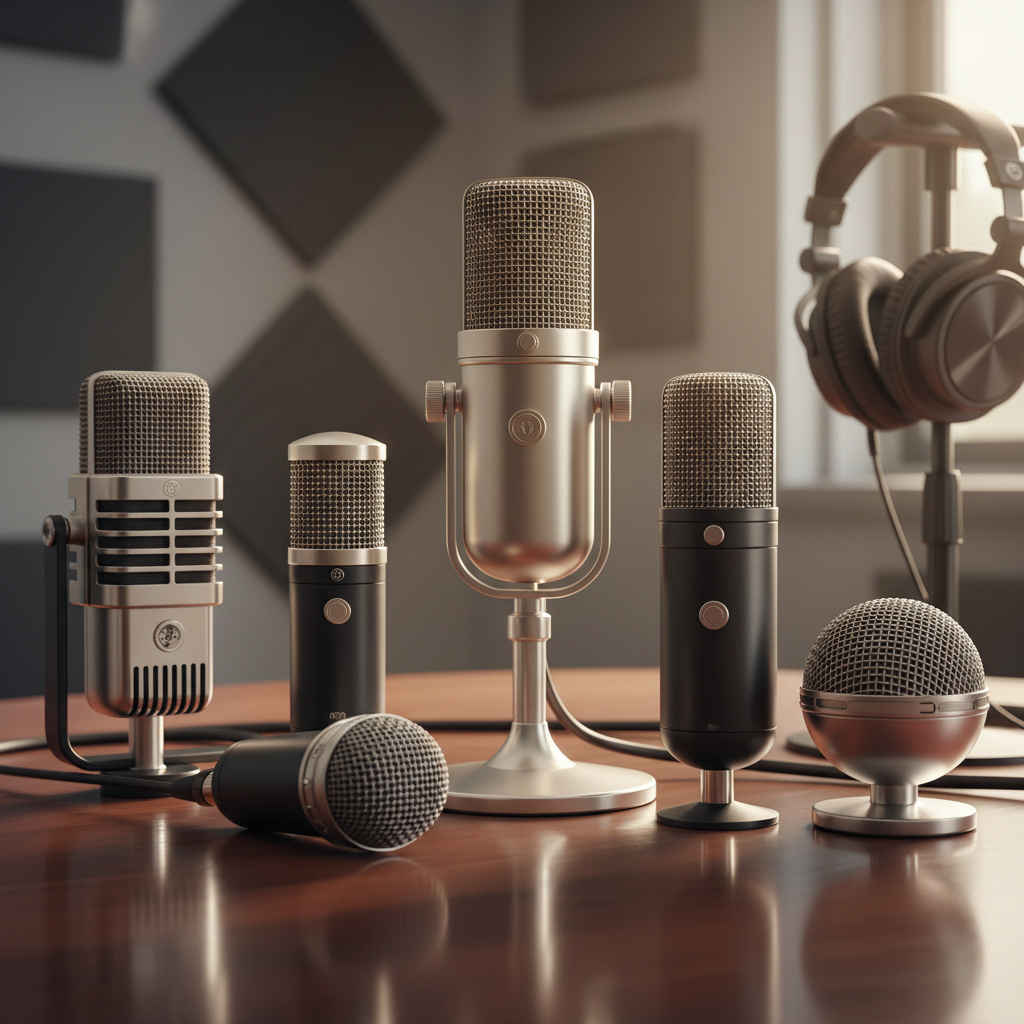
For aspiring musicians, podcasters, and voiceover artists, the microphone is often the first critical piece of equipment acquired for a home studio. But with an overwhelming array of choices, from sleek USB mics to professional-grade XLR condensers, deciding which microphone to purchase can feel like navigating a maze. This article aims to demystify the process, helping you choose the right microphone that both suits your needs and fits your budget, ensuring you capture clear, professional-sounding audio every time.
Understanding Microphone Types: USB vs. XLR
The primary distinction you’ll encounter when shopping for microphones is between USB and XLR connections. USB microphones are incredibly user-friendly, plugging directly into your computer’s USB port. They often contain a built-in preamplifier and analog-to-digital converter, simplifying your setup significantly. This “plug-and-play” convenience makes them ideal for beginners, remote work, or situations where portability is key. Examples include the Blue Yeti or Rode NT-USB Mini. While convenient, USB mics typically offer less flexibility and upgradeability compared to their XLR counterparts.
XLR microphones, on the other hand, connect via a three-pin XLR cable to an audio interface. An audio interface is a separate device that converts the microphone’s analog signal into a digital signal your computer can understand, and it usually provides phantom power (a small electrical current needed for some microphones) and volume control. While requiring this additional piece of gear, XLR setups offer superior sound quality, greater versatility, and are more geared towards serious recording. Popular XLR microphones include the Shure SM58 (a classic dynamic mic) or the Audio-Technica AT2020 (a popular condenser mic for vocals and instruments).
Condensers vs. Dynamics: Capturing Your Sound Source
Beyond the connection type, microphones are broadly categorized as condenser or dynamic, each excelling in different scenarios. Condenser microphones, like the Audio-Technica AT2020 mentioned earlier, are known for their sensitivity and ability to capture a wide frequency range with great detail. They are perfect for vocals, acoustic instruments, podcasts, and any source where nuances and clarity are paramount. However, their sensitivity means they also pick up more room noise, making them ideal for treated rooms or quiet environments.
Dynamic microphones, such as the Shure SM58, are robust, less sensitive, and handle high sound pressure levels (loud sounds) exceptionally well. They are commonly used for live performances, electric guitar amps, drums, and powerful vocals. Their lower sensitivity helps them reject background noise, making them a good choice for untreated rooms or situations where you want to isolate a specific sound source. If your primary goal is recording loud instruments or performing live, a dynamic mic might be your best bet.
Key Considerations: Sound Clarity, Compatibility, and Budget
When making your decision, keep these practical points in mind. First, **sound clarity** is paramount. For vocals and acoustic instruments where detail is crucial, a good condenser microphone connected via an XLR interface will generally offer superior clarity and a wider frequency response. For spoken word (podcasts, voiceovers), even a quality USB condenser can produce excellent results, especially if your room is quiet.
Second is **compatibility and future-proofing**. If you’re serious about growing your home studio, investing in an XLR setup with an audio interface offers more expansion options. You can easily upgrade microphones in the future without needing a new interface. USB microphones, while convenient, might limit your choices if you decide to add more complex recording setups later.
Finally, consider your **budget**. USB microphones generally offer a lower entry cost since they don’t require an additional audio interface. You can find excellent USB mics in the $50-$200 range. For XLR setups, you’ll need to allocate funds for both the microphone (which can range from $100 up to several hundred or even thousands) and an audio interface (typically $100-$300 for a good beginner model). Don’t feel pressured to buy the most expensive gear; focus on getting the best quality within your budget. Many affordable microphones offer incredible performance for their price.
By understanding the differences between USB and XLR, dynamic and condenser mics, and carefully considering your specific needs for sound clarity, future compatibility, and budget, you can confidently choose the perfect microphone to elevate your home studio recordings from amateur to impressive.